

Saving Mobile Data on 1xBet: App vs Website vs Streaming
- Watching your mobile data bundle? The 1xBet Android or iOS app is the cheaper route over time, because a browser reloads pages and assets on every visit while an installed app caches most of them once. The real burn comes from watching live streams, from the constant live odds refresh, and from casino graphics. The mobile site costs more each time you open it.
- Avoiding live video entirely while on cellular data is the single habit that cuts usage most, then checking your bet slip later on Wi-Fi. Live betting itself still works without video, and you keep the odds and the markets. You trade the picture for the bundle.
- The walkthrough below follows one concrete match evening from start to finish. Where a figure matters and the listings gives none, you will see that stated plainly rather than a number invented for it.
Where the app actually spends your data
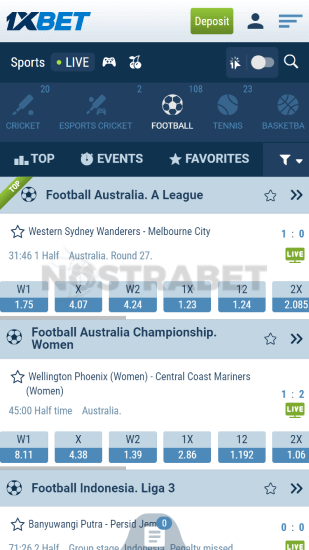
- Once 1xBet is installed, the installation itself is a one-off cost from your bundle. After that, the app pulls three things repeatedly. The first is live odds refresh, which fires whenever a market you have open moves. The second is live video, which streams continuously while you watch. The third is casino and slots graphics, which load heavy image and animation assets as you browse lobbies.
- Of those three, video is the heaviest. Live odds refresh is comparatively light but never stops while you have a live market open. Push notifications, which exist only in the app, add a negligible trickle rather than a real charge.
- Because the app holds its assets in device storage rather than fetching them fresh, repeated sessions cost less than a browser doing the same work. This is the main reason the installed route stays ahead of the mobile site once you are past day one.
How the mobile site compares on the same plan
The 1xBet mobile website mirrors the app for markets, live streams, and account management, so nothing is functionally missing. What differs is the loading pattern. Every new visit asks the browser to rebuild the page, re-request the layout, and re-render the interface, and that repeated loading is where the site pulls more than the app.
The site wins on storage: it consumes none of your device space. On a strict data budget, though, storage is the wrong currency to optimise. The extra requests across a week of casual use outweigh a one-time install download, especially if you open the site several times a day.
| Aspect | 1xBet app | 1xBet mobile site |
|---|---|---|
| Recurring data | Slightly lower once installed | Higher from repeated page loading |
| Device storage | Takes up space | Uses none |
| Push notifications | Available | Not available |
| Live streams and live betting | Available | Available |
Walking one concrete match day end to end
Take a Saturday with three fixtures you care about. You open the app at noon to check the line, scroll two markets, and close it. That costs almost nothing, because the interface is already on the device.
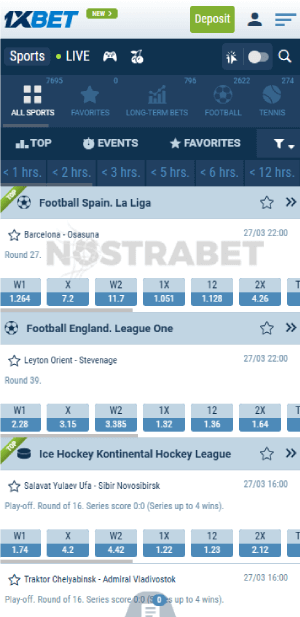
- At half time you tap the live stream to watch the second half. This is where the bundle moves. Video arrives as a continuous feed, and your usage climbs every minute it runs, regardless of the odds panel beside it. If you had instead closed the stream and refreshed the score page once every few minutes, that same half would have cost a fraction of the data.
- After the match you open the casino section out of curiosity, swiping through a dozen slots. Each lobby screen pulls artwork and thumbnails, and the animated ones pull more than static ones. You do not play a round; you only browse. That browsing is the second-largest charge of the day, behind the stream.
- On the way home you check your bet slip again on the mobile site, because you did not install the app on this phone. The browser rebuilds the page from scratch, requests the assets anew, and you pay for a layout you had already seen an hour earlier. Multiply that by a week and the site’s repeated loading becomes visible on your statement.
The branch: you watch live streams often
If your habit is watching matches in the app, no amount of settings tuning will protect the bundle. Video is the cost. The practical options are narrow, and worth choosing between deliberately:
- Switch to Wi-Fi for anything longer than a quick clip, and treat cellular video as off-limits.
- Watch the in-play markets and the live score without opening the video pane at all.
- Open the stream only for the decisive minutes you actually care about, then close it.
- Check the stream once on a trusted connection before betting so you know what the picture quality is doing to your plan.
Live betting works fine without the picture. You keep odds movement, you keep markets, and you keep your slip. What you give up is the visual feed, and on a limited plan that is the correct trade. If you do open video, treat live streaming as a deliberate, bounded session rather than background wallpaper you forget is running.
The branch: you mostly place pre-match bets
Pre-match use barely registers against a bundle, because nothing refreshes continuously. You open the app, pick a fixture hours before kickoff, place the bet, and close it. The only recurring traffic is a check of the odds before the event starts. On this pattern the app and the mobile site are close enough that the difference is noise.
The decision then turns on push alerts rather than data. Only the app delivers them, so if you want to be told when a line moves or a goal lands without opening anything, you need the install. The alert itself costs almost nothing; it is the open that follows which you should keep short.
The branch: you play casino and slots
Casino sections are the most visually expensive part of 1xBet after video. Lobbies load artwork per game, animated titles load more than static ones, and opening a title loads its full asset set whether you spin or not. If your plan is tight, browse lobbies on Wi-Fi and restrict cellular play to one or two titles you already know.
| Activity | Relative load | Can you reduce it? |
|---|---|---|
| Live video stream | Highest | Yes, by not opening it on cellular |
| Casino and slots graphics | High | Yes, by browsing lobbies on Wi-Fi |
| Live odds refresh | Moderate, continuous | Partly, by closing unused live markets |
| Pre-match page checks | Low | Minimal further gain |
| Push notifications | Negligible | Not worth changing |
Habits that cut usage the most
The order below is roughly how much each habit returns against the effort it costs. Start at the top and stop when your plan stops alarming you.
- Never open live video on cellular data; use Wi-Fi or go without the picture.
- Close live markets you are no longer watching so the odds refresh stops running.
- Browse casino lobbies on Wi-Fi, and keep cellular play to one or two familiar titles.
- Prefer the installed app over the mobile site, because repeated page loads are the site’s main cost.
- Check your bet slip on a single visit rather than refreshing it through the match.
- Use push alerts from the app instead of opening it every few minutes to look.
The last item matters more than it appears. A person who opens the app ten times to see if anything changed generates ten page loads; a person who waits for one notification generates one. If you are about to move money into your 1xBet account and place your next bet, the simplest start is the 1xbet apk download latest version, because the installed route keeps the bundle intact.
Deciding between the app and the mobile site
Having device storage to spare and betting more than a handful of times a week points straight to the installed app. It loads faster, it costs slightly less data across repeated sessions, and it is the only route that sends push notifications. Those three facts together usually settle the choice.
Stay on the mobile site if your storage is full, if you only bet occasionally on this device, or if you share a phone and do not want the app present. The site gives you the same markets, the same live streams, and the same account tools.
Keeping data use low on a limited bundle
Data-wise, the installed app still wins: it loads pages and odds quickly and settles into a lighter state once the files sit on the phone, whereas the mobile site re-loads content with every visit. Feature-wise the two are close, though push alerts on goals and substitutions are app-only, so you can follow events without constantly refreshing a browser page.
- Skip live streams and casino graphics; they are the heaviest consumers.
- Rely on notifications instead of reopening the app to check scores.
- Use the app rather than the mobile site to avoid repeated reloading.
- Keep only the menus and markets you need in the customizable layout.
- Sign in to your 1xBet account on one route only, so you are not loading both.
FAQ
Does turning off autoplay in the browser reduce 1xBet video data?
It stops a stream from starting on its own, but any stream you deliberately open still pulls at full rate for as long as it runs.
Can I use 1xBet live betting if my connection drops mid-match?
Live markets pause until the connection returns; pre-match slips already placed stay active, and you can view them once you reconnect.
Does the 1xBet app keep downloading data while it is closed?
Push notifications can still arrive, but they carry very little data, and the listings do not document any background refresh of markets or streams.
Will a data-saver mode in my phone browser affect casino graphics?
Some browsers compress images automatically, which trims lobby artwork, but animations and video are typically exempt from that compression.
What happens to my open live market when I switch from the app to the mobile site?
The market is tied to your account, so it appears on both routes once you sign in; the slip itself is stored server-side rather than on the device.